Showing posts with label choice. Show all posts

Saturday, March 5, 2011

Human Milk for Human Babies

"Breast milk is not a scarce commodity, it's a free-flowing resource."
Emma Kwasnica

I've recently become involved with an amazing group, Human Milk for Human Babies, formerly known as Eats on Feets Global.  This is one of the most amazing movements, and I am incredibly honored to be a part of it.

There are mommies like me who can't breastfeed their babies, or mommies who breastfeed but don't make enough milk.  When I was hospitalized, my breastfed baby needed food.  Formula is food, but not the food I would have chosen for him - breast milk is a superior food, made for baby humans.  Cow's milk is made for baby cows, and doesn't offer the same benefits, especially in a baby's GI track - which is of particular concern to me, since IBD can be hereditary.  I reached out to my local milk bank - but I found out that not only is the milk $4 per ounce ($120 a day!!), we couldn't have it, even if we wanted it.  My baby was healthy and full-term.  So, David got formula - and I'm glad it was there.  It was not an easy transition - his tummy was upset, and he really hated the taste.  But, food is food, and he eventually adjusted.  He's done well on formula - he's healthy, strong, and smart.  As my readers know, I don't have anything against people who choose formula as their baby's food.

If I'd had a choice at the time, though, I wouldn't have chosen to feed my son formula.

I learned about Eats on Feets through you, the readers of this blog.  I became friends with Emma Kwasnica, the group's founder on Facebook, and I was blown away by her passion and dedication.  At one point, she posted an amazing photo - a friend of hers was suddenly hospitalized, and she nursed her friend's baby while she was incapacitated.  The picture brought me to tears.  One image encapsulated the philosophy of milk sharing - that in an emergency, women could rely on each other.

Emma nursing a hospitalized friend's baby.  Don't like to see boobs?  Read this.

This is the heart of milk sharing and milk donation - that in an emergency situation, mothers who want their babies to be exclusively breastfed have that option, even if real life circumstances don't allow for it.  If a mother wants to use formula, fine by me - but if she doesn't, there should be a way for her to find an Emma!

Eats on Feets has become "Human Milk for Human Babies", a name that better describes its mission and can be translated across the globe (there's even a chapter in Kuwait!).   Mothers like me can meet local mothers like Emma, who have a surplus of milk to provide.  Not necessarily boob-to-mouth; most donation happens with the help of a pump and a freezer.  Some mamas overproduce, and they have mountains of bags of milk stored, more than their baby can consume before it expires.  Thanks to HM4HB and other milk-sharing connections, that milk can find its way to a local baby in need.


One of the coolest things about this is that HM4HB is not just getting babies milk, it's helping women connect and become friends.  While you can use milk sharing networks to just get milk and move on, I'm amazed at the real life connections that are happening.  Donor and recipient mommies are getting to know each other, having coffee, setting up playdates, visiting each other's homes.  There is a community growing as a result of the sharing.  Unlike donating to a milk bank, donor mommies can often hold the babies their milk is feeding, watch them grow and thrive on the precious gift of liquid gold.  In a world where technology so often distances, this is creating a village where none existed.

Are there risks to milk sharing?  Yes, of course.  There are risks to everything in life.  There are risks to formula-feeding (I fed my kid bugs, thank you Similac).  HM4HB isn't promising a risk-free solution, just a forum in which parents can have a choice - an informed choice.   Previously, the only choice moms like me could make was which brand of formula to buy.  Now, we can choose if we want to go check things out on the donation road.

As a recipient, ultimately, you trust that the woman who is donating is healthy and living a healthy life.  If she's breastfeeding her own child, you simply trust that she cares about her own baby enough to avoid things that could make her milk dangerous.  You can pasteurize the milk at home (instructions here), and many recipients ask for copies of their donor's prenatal medical records or request additional screening for safety.

Check it out!  If you have milk to donate, wouldn't it be nice to know exactly where that milk is going?  If you really hate feeding your baby formula, why not explore donated breast milk as an option?

Human Milk for Human Babies - Website
Find your local chapter here
Frequently Asked Questions

Sunday, February 13, 2011

Vaccines and Decisions

I have never been so torn on an issue, perhaps in my life, as I am on the subject of vaccines.  Right now, I have the luxury of indecision.  Because of one of my meds (the immune suppressant), my doctors have decided it's best for my son to be unvaccinated for the time being, and I have the medical seal of approval to postpone the decision of vaccination.  My son did get DTaP before I went on these meds, and technically he could have inactivated vaccines, but we're holding off until I'm 100% sure.  You can't "un-vaccinate"; once it's done, it's done.

For those who do not vaccinate, a medical exemption is the holy grail of paperwork.  For those who believe in the importance of complete vaccination, my situation is a terrifying limbo of irresponsibility.  I see both sides of the issue, and I'm stuck.

Most parenting issues have become clear to me with research.  Breastfeeding, circumcision, spanking, co-sleeping, babywearing.  They're pretty clear-cut, and most research sits on one side or the other.  Vaccinations... eek.  Not so clear.  I have done hundreds of hours of research on vaccines, and I'm still incredibly torn.

Borrowed from Peaceful Parenting, in case you want to say "I'm vaccinated and I'm fine"
Our children are being vaccinated against many more things than we were.


I have reached 2 conclusions, both of which are controversial.  Isn't this whole topic?

1 - Vaccines are not useless.  They do work.  Maybe not as well as advertised, but they have value.  The rabies vaccine prevents the spread of rabies among dogs.  The influenza vaccine does actually reduce the incidence of flu it purports to prevent.  Since the widespread vaccination of the American public, the diseases for which we vaccinate have decreased precipitously.  I am still immune to measles, mumps and rubella, 25 years after my last booster, diseases I did not have naturally.  Vaccines generally do protect against the diseases they claim to, a majority of the time.

2 - Vaccines are not 100% safe.  They have risk.  Vaccine-related injury is real, adverse reactions are real, and to the rare number who experience them, the injury is often worse than the disease the vaccine is intended to prevent.  It is possible that vaccines damage the overall health of a person's immune system.  Unvaccinated children are, overall, healthier than their vaccinated counterparts, experiencing less chronic and acute illness during childhood and early adulthood (these studies are imperfect in design but still compelling).  Parents who consciously choose not to vaccinate are not morons; they are generally better informed and educated about the issue than those who vaccinate. 


Ethically, I am opposed to the concept of forcing a child to endure pain and sickness, against their will, to prevent potential future harm.   The child is not in immediate medical need or danger, like a child who needs stitches. I am opposed to sacrificing one child for the benefit of many; the herd immunity argument doesn't sway me.  One child should not die so that millions can live; that argument holds no water to the mother of the dead child, nor should it.  I believe in the inherent ability of the natural immune system to handle routine illness, and I believe that a bored immune system is a dangerous thing to have, increasing risks of allergies and auto-immune responses. 

Logically, I am opposed to the reintroduction of measles and polio into the general population, and I do believe that vaccines have something to do with the decrease of diseases (but not all - Polio in particular has a really interesting link to pesticides).  I don't want to see a Rubella outbreak.  I have heard the cries of a baby with pertussis, and they are heartbreaking.  If my son were to experience harm as a result of a vaccine-preventable illness, or worse, were to pass that illness on to another child, I would be devastated.

Emotionally, vaccinating feels wrong - no mother "looks forward" to a visit for shots.  On every other parenting decision, I have trusted my "gut" or "mommy instinct" and it's always been right.  Here, in this one circumstance and no other, I am expected to restrain my baby, cause him pain and potentially cause him harm, to avoid the potential of harm.  This isn't about fighting a diaper change or being annoyed about being in a carseat; the pain is real, the immediate harm is real (even if it's only a mild fever and a sore leg).  If you physically restrain an adult against his will and stab him with a pen or a thumbtack, it is called assault.  I spent a lifetime terrified of doctors and needles.  Babies today are mandated to have triple the number of vaccines that I had; every child I know is petrified of going to the doctor; their parents have to lie to them and bribe them to get them in the door. 

Intellectually, I realize that people used to die of vaccine-preventable diseases in great number, and that my ancestors would likely think I'm crazy for even debating this topic.  Vaccines are considered among the world's greatest medical discoveries, one of the greatest discoveries of human history, by minds greater than mine.  My pediatrician is in favor of most (but not all) vaccines; I respect her opinion as a medical professional.  I respect her years of experience and expertise.  I also know that the entire American pediatric business model revolves around vaccines, and without a visit every 2-6 months for a shot, pediatricians offices would be a lot emptier than they are now.  Money talks.  Vaccines make literally billions of dollars a year for doctors and pharmaceutical companies, both via direct and indirect sources.


Polio kills.  Mumps is bad.  Tetanus, Diphtheria, Hepatitis, pertussis, HiB, meningitis, all of them - this is bad stuff, and I don't want my baby to get any of them, if I can help it.  Hell, my double exposure of chickenpox (at 13 and 32, thanks immune suppressants) was miserable enough that I'd happily have taken a shot in the arm instead of 6 cumulative weeks of misery!  Regardless, I am too informed to respond to the "less mercury than a can of tuna" line. 

I am asking for feedback tonight, on what ultimately made your decision, one way or the other.  I don't have to make a decision right now (in fact, I can't) but I could use some guidance. 

Why did you decide to vaccinate your child, or choose to skip or alter the standard schedule?

Tuesday, December 21, 2010

Necesareans

Note: if you are planning a natural birth, especially with hypnosis, don't read this without your "Bubble of Peace" on Mega-Force-Field-Strength.  If you are planning a peaceful, wonderful, pleasant and awesome birth and you want to visualize only wonderful happy things, click here for my favorite water birth video.

If you'd like to learn about real medical reasons for c-sections so you can potentially help avoid an unnecessary one, please proceed.


You've been warned.  Bubble up?


Necesareans


The current US c-section rate is somewhere between 33 and 38% of all deliveries.  The World Health Organization states that no region in the world should have a rate greater than 10-15%.  If the WHO is correct, that means that 54%-73% of all American cesarean deliveries are unnecessary.  Average the numbers out, and that means that 2 out of every 3 c-sections performed in the USA may be unnecessary.    Let’s play with some pretend, averaged and hypothetical numbers.


The 2010 rate is estimated at 33.9%.


100 laboring women.  33 have c-sections.  22 women had surgery they may have been able to avoid.

Now here’s the twist.  11 of them did need c-sections.  There are valid medical reasons for c-sections.  Women used to die in labor, far more often than they do today.  Babies used to die in horrific numbers during childbirth, and the c-section is an amazing medical advance, a relatively “safe-ish” surgery that can and does save lives.  Before the advent of the c-section, labor and delivery were leading causes of death for young women and babies. Since 1980 (and not on this chart), the number of maternal deaths is rising again, and many say it is because of the overuse of the cesarean section.

Maternal deaths per 100,000, 1880-1980


How do you know which one you are?  Is your birth a real emergency, one of the 11, or one of the 22 that might have been avoided and could be putting you and your baby at needless risk?  Your doctor will always tell you that you’re one of the 11, unless you have an elective surgery (very rare – despite the hype, less than 0.5% of c-sections are truly elective, with zero “medical” reasoning provided).  Your doctor will always say that you had a c-section because it was necessary.

So, you’re in labor, or close to it.  Things aren’t going according to plan.  Your doctor wants to do a c-section, and they’ve been to medical school.  You haven’t.   How do you keep from being part of the 22?  How do you know if you’re one of the 11?  Ultimately, you have to trust your care provider, which is why selecting one is so very important.  You also have to do everything you can to reduce your risk of running into a real medical reason (avoiding interventions unless they are medically necessary).

Below is a list of medical indications for cesarean section, with details. Knowledge is power, right?

As always, please note: I am not a doctor.  I have not gone to medical school.  I have never performed a c-section.  I am not an expert.  I am a mommy who likes to write stuff and post it on the internet.  Please do not take anything I write as medical advice, but as information and opinion.  Inform yourself, do your own research, and talk to your medical experts before you make a serious decision that could seriously impact you and your baby.

Necessary C-Sections

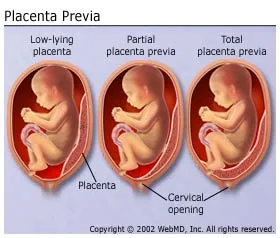
Placenta Previa


Placenta Previa means that your placenta is located above your cervix.  Both partial and complete placenta previa (placenta blocks the cervix completely at the time of delivery) is absolutely an indication for c-section.  If your placenta blocks your baby’s exit, you are at risk for extreme bleeding, and there is no way for the baby to get out.

What you should know: Placentas can move.  Suspected placenta previa can be often be confirmed via ultrasound or even via vaginal exam.   Just because you have a low-lying placenta early in your pregnancy does not mean it won’t shift out of the way by the time of delivery. “Marginal” placenta previa, where the placenta is just very close to the cervix, is not generally an indication for c-section.  You should know which one you have before you consent; information is power.

Cord Prolapse


If your water breaks, and the cord comes out before the baby, this is Umbilical Cord Prolapse.  Cord prolapse is an immediate emergency – either you must immediately deliver vaginally, or proceed directly to the OR.  Time is of the essence to save the baby’s life – whichever method gets the baby out fastest should be used.

What you should know:  Cord prolapse is much more likely to happen if your baby is premature, and especially if your waters are broken artificially.  So, if your care provider offers to "get things moving" by breaking your water with a hook, remember that this is a (small) possibility.

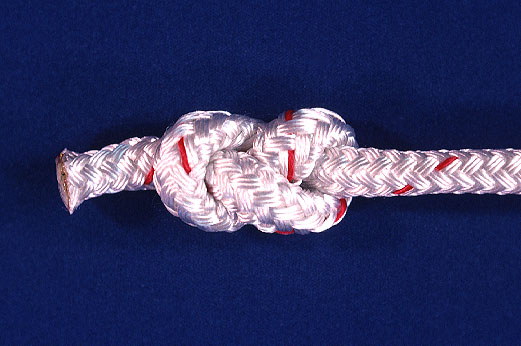
“True” Knot in Umbilical Cord

These are very difficult to diagnose prenatally, but it has happened with 3D ultrasound (which carries risk).  A true knot is exactly what it sounds like - it can prevent oxygen from getting to the baby.  If one is seen on ultrasound (again, rare – usually they are discovered after delivery), you will likely be sent to the OR.

Placental Abruption

If your placenta detaches from the wall of your uterus while the baby is still inside you, this is a placental abruption.  Symptoms are severe abdominal pain, heavy bleeding and back pain.  Partial abruption prior to labor is usually treated by bed rest and transfusions, but a complete abruption at any point or any kind of abruption during labor is an emergency situation.  Like a cord prolapse, immediate steps need to be taken to get the baby out – immediate vaginal delivery or emergency cesarean.

Click here to read a very sad story about a baby lost due to an abruption - recognizing the symptoms of an abruption and seeking immediate, emergency help is vital to avoiding this tragic result.

Uterine Rupture

If the uterus tears, an immediate, emergency c-section must be performed to save the life of the mother and baby.  This is rare (1/1500 births).

What you should know: Risk of uterine rupture is often given as a reason not to allow VBACs (vaginal birth after cesarean).  New research shows that the risk of c-sections may be higher than the risk of rupture, which is very rare.

Toxemia, Severe Pre-Eclampsia, HELLP syndrome, pregnancy-induced hypertension


Pregnancy-induced hypertension is high blood pressure that just keeps rising.  Eclampsia, toxemia and HELLP are all potential complications of uncontrolled high blood pressure in a pregnant woman.   If PiH isn’t controlled, high blood pressure can cause strokes, cerebral hemorrhage, respiratory distress and even death for the mother, as well as endanger the baby.  Toxemia, HELLP and Eclampsia are all potentially deadly complications of uncontrolled PiH.

During pregnancy, there are a number of treatments that can slow disease progression.  The only “cure” is delivery.  If your blood pressure rises severely enough and quickly enough, it is imperative to get the baby out ASAP.   BP over 160/110 is considered severe.  Because prolonged labor can be stressful on your body (not that c-sections aren’t!) many doctors prefer to perform a c-section to avoid the possibility of your blood pressure rising further.  If the situation becomes unmanageable, immediate action to deliver the baby is required.

You should know: You can reduce the risk of pre-eclampsia with diet and exercise, among other things.  Click here for more information about pre-e (to start).


Transverse Lie (baby is lying sideways)

While it is possible to deliver a breech baby vaginally, it is not possible to deliver a baby who is sideways in the womb.  That being said, babies move.  Just because your baby is sideways NOW doesn’t mean they’ll be sideways when you actually go into labor.  80% of babies who are transverse at 37 weeks have moved when you go into labor!  So, don’t just schedule the c-section.  Wait to see if baby flips.  Check out http://www.spinningbabies.com/ if you want to get your baby on the move.

You should know:  While transverse lie is an indication for surgery, breech often isn't.  See below.


Acute Fetal Distress


Fetal distress is often used as a reason for c-section delivery, but the definition is nebulous.  “We’re worried about the baby” is a sure-fire way to get a laboring woman into the OR without argument.  There is a difference between “fetal distress” and “acute fetal distress.”  There is a clear definition of acute fetal distress. 

Most babies become mildly distressed during labor – so do many moms!  Being born is hard work, and it can be stressful.  Your baby is often working as hard as you are in this team effort.  There’s a BIG difference between being stressed and being in danger.  Below are the textbook definitions of “Acute Fetal Distress”.  #1, 2 and 5 alone are enough to indicate acute distress.  #3 and 4 are used in conjunction with other factors.

1 – Fetal heart rate greater than180 bpm or less than 100 bpm for longer than 4 minutes.  Note – an occasional rise or fall to these numbers does not automatically indicate distress.  An average over one minute is used.   

2- Repeated or variable deceleration.  It is normal for the baby’s heart rate to increase and decrease during and after contractions.  If the dips become too severe, it can indicate fetal distress.  If they don’t happen in time with the contractions (variable), they could be related to something else, such as trouble with the cord or placenta.

3 – Meconium staining of the amniotic fluid.  This alone is not necessarily an indication of distress, but it is a symptom.  Distressed babies release meconium (poop in the womb).  Not all babies who produce meconium in utero are distressed.  (Irish girls have pale skin.  Not all girls with pale skin are Irish.)

 4 – Fetal Movement: frequent decrease and weakening.  Again, this is not an indicator by itself; many babies get “quiet” during labor, often just to sleep.  If decreased movement happens along with another factor, it’s cause for concern.

5 – Acidosis: If you want to be sure if your baby is in distress and there is time, this is a definitive test.  A blood sample is taken from your baby’s head (a tiny scratch).    They can immediately test the blood’s PH, oxygen and carbon dioxide levels to see if your baby isn’t getting enough oxygen.  This is only possible if the baby’s head is engaged and your water had broken.

                pH below 7.20 (Additional information about acidocis here)

                pO2 (oxygen level) below 10mmHg

                CO2 (carbon dioxide) above 60mmHg

If the baby is in acute distress, it’s time to get the baby out, by the swiftest method possible.  Please, if your doctor says the baby is in danger, don't spend time printing out this post and checking the lab work...

More information about fetal distress here

You should know: If the baby is in mild distress, the first course of action should be to attempt to remove whatever is causing distress.  Sometimes, your position can be compressing the cord – occasionally, if you change position (lie on your side, your stomach, or even get in a tub), this can alleviate pressure and allow the cord blood to flow properly.  If you’re on pitocin, they should turn it off.  Overly strong contractions can stress the baby.


Previous Abdominal Surgery

This is not absolute, but depends on the type of incision and the type of scarring.  Certain abdominal surgeries can cause complications during vaginal childbirth.  One example is a iliostomy/j-pouch surgery, removal of intestines, vertical previous c-section, or c-section that is not yet healed (less than 1 year).  Necessity is dependent on the location of scarring and weaker tissue.


Active Herpes Lesions

If you have genital herpes and have active lesions, you can pass the disease on to your baby at birth.  Herpes can be deadly to a newborn, and there is no cure, so they’ve got it for life.  Between 10 and 14% of women with genital herpes have a lesion at delivery.  The chance of passing the virus to your baby decreases based on the amount of time Mom has had the disease.  If you have had herpes for years, the theory goes that you have developed antibodies and will pass these to your baby – even if you have a current lesion.  If you acquire herpes during your pregnancy, especially during the 2nd and 3rd trimester, your risk is highest, and you may consider a c-section even if no lesions are present.      See this site.

Multiples greater than twins


Triplet and higher deliveries are almost always delivered by c-section.  First, these deliveries are rarely full-term, and premature babies may not handle the stress of labor as well as full-term babies.  Second, 3+ cords and 3+ placentas can be complicated.

You should know: Twins are regularly delivered vaginally without complication.  Even triplets can and have been delivered vaginally (see here for a recent study), but this is rare because triplets and greater so often arrive ahead of schedule.

Known Health Emergency for Baby

If your baby has certain known health issues or birth defects (I hate that phrase, no baby is “defective”) that need to be addressed immediately, a cesarean section may be your best choice. Work with your neonatologist.

Health of the Mother
If a mother is physically incapable of labor because of her own health conditions, c-section is the alternative.    Some examples include physical abnormality (certain kinds of dwarfism or pelvic abnormalities), some kinds of paralyzation, out-of-control diabetes, and a few other extreme conditions.

Generally speaking, most women are capable of at least attempting a vaginal birth (there is stress involved in a c-section as well; delivering a baby isn't a walk in the park no matter what your health).  You and your doctor need to weigh the benefits and risks.


DEBATED REASONS

These are reasons often given for cesarean sections.  There is debate about them.  Some people say they’re necessary to mitigate risk, others say that vaginal birth should first be attempted.  Do your research, work with your care providers and reach your own conclusions.

If you do decide to have a c-section, armed with the facts, more power to you.  My goal is informed consent.  If you personally decide that the risks of a c-section are less than the risks of vaginal birth, awesome.  I just hate to see women pressured into something they "had" to do when they didn't want it.

Abnormal Fetal Position (breech): 


Most midwives and doctors will not deliver a breech baby vaginally – but some will.   Many babies are born happily and peacefully in the “frank breech” position, that is, butt first, feet by head.  This position is most favorable to vaginal birth, if you can find an experienced provider who is willing to assist.  Breech babies have all been delivered successfully vaginally.  Breech births do carry higher risks of cord prolapse, increasing with the type of breech delivery.  Not included here is Footling breech, which carries the highest risk.  In this presentation, baby comes out feet first. 

If you attempt vaginal delivery of a breech baby, it is of vital importance that your midwife/OB be well-versed in the intricacies of breech birth.  If you can’t find one (providers are much more rare than breech presentations), you may have a c-section.  It is important to note that vaginal breech birth should not be attempted without an experienced medical professional who is on board with delivering breech.  There are risks to delivering breech vaginally; neonatal death has happened as a result of breach deliveries being handled improperly.  Work with your provider to assess your individual situation.


HIV Infection

Some research has shown that HIV transmission from mother to baby can be reduced by surgical delivery.  Other research has contradicted this, and found that there is no increased risk with vaginal delivery.  For more information, start here and keep on going: http://www.wdxcyber.com/npreg13.htm


Failure to Progress

I would personally argue with this reason.  If failure to progress exists but is not accompanied by any health issues for mom or baby (see Acute Fetal Distress above), what most mothers need is patience, not surgery.   Mom may need more support.  She may need help feeling safe.  She may need (eek, omg, yes I’m saying it), help with pain so she can sleep, or other medical assistance.  Surgery should be the last option, not the first.  Get in a tub.  Close the doors and kick the world outside.  Listen to soft music, turn down the lights.  Magic can happen!

Long ago in caveman days, you wouldn't want to deliver a baby in "unsafe" conditions.  Say, there's a warring tribe attacking your cave, or a tiger on the loose - real, physical danger.  You wouldn't want to deliver a helpless baby.  We're programmed so that labor slows down in periods of stress and fear.  Many women who aren't progressing need to feel extra safe and protected before their bodies will allow them to birth their children.  Threatening most women with unwanted surgery is not a way to make them feel safe!   

Healthy labors can last for days, especially the first time around.  This is not necessarily pathogenic.  It is annoying to hospital administrations who may want the room for the next woman.... So, personally, unless fetal or maternal health shows signs of deterioration, I'd argue against the knife.

True “failure to progress” is defined as 4 or more hours with no dilation progress, when mom is dilated at least 5cm.  Early labor (less than 5cm dilated) can last for a really long time under totally normal circumstances.  


Twins (or sometimes even triplets)
Twins are, like breech, a variation on normal.  Like breech delivery, you will need to find an experienced caregiver to work with you, but it's absolutely possible.  Baby position is also key here - ideal presentation is below, but babies have been successfully delivered in all sorts of presentations. 

This is a great site to see videos of twins born vaginally: http://www.givingbirthnaturally.com/natural-childbirth-video.html

This is also a great discussion of mothers who've done it.

An additional complication to the births of multiples is prematurity or babies who are small for their gestational age.  Please work closely with a trusted professional to determine your best 

Twins, both head down, an ideal position for vaginal birth.
  What you should know: Delivering one twin vaginally and then the next by c-section is not unheard of.  Some providers (but not all) prefer that you have an OR on "standby" or at least nearby when delivering twins or triplets the old-fashioned way. 

Previous Cesarean Delivery

VBACs are not permitted in many hospitals.  Why?  Well, there have been some studies done that showed an increased risk of uterine rupture in mothers who had previously had a c-section.  It scared hospital administrations, and nowadays a lot of hospitals won't let you try vaginally.

The evidence does not support this fear.  The risks of a second c-section are usually higher than the risks of attempting vaginal birth.  You may have to fight hard for a VBAC, but the evidence is with you.

I am oversimplifying the situations surrounding VBAC - but if you'd like to consider it, please do some research.  Not all cesareans are alike, and not everyone is a good candidate for VBAC.  If you are a candidate, you may want to consider it.  See the bottom of this page for additional information.

Macrosomia (baby's too big)

This one's tossed around a lot as a reason for surgery.  Again, most evidence does not support it.
I don't remember where I found this picture.

1 - It is very difficult to truly assess the size of a baby before he's born.  Ultrasounds and belly measurements are notorious for being way off.
2 - Most mothers' bodies won't make a baby too big to come out.
3 - Big babies are delivered vaginally all the time.  11-12 pounders!
4 - Baby fat squishes.

If a baby is truly too big to come out the old-fashioned way, that will prove out in labor.

Cephalopelvic disproportion  (CPD)

A variation on the "baby's too big" theme, true CPD is also rare, and virtually impossible to diagnose prenatally.  CPD means the baby is too large to fit.  Sometimes smaller-statured mothers are given this as a reason for c-section. 

Tiny mommies have big babies naturally all the time. CPD is real, but it varies widely.  Mothers who have had c-sections for CPD have gone on to have successful VBACs. 

You should know:  If a baby does get "stuck" (shoulder dystocia), changing positions can enlarge the pelvic opening.  The Gaskin Manuver is a potentially life-saving technique that can be used in the event of shoulder distocia.  The lithotomy position (on your back with your legs up in stirrups) is the one of the *smallest* positions for a woman's pelvis.  Flip to all fours or squat, and you can get up to another 3cm in diameter!  Shoulder dystocia is a true emergency for the baby, and a competent provider is absolutely essential to saving the baby's life.


Plus-Sized Mama

I am a plus sized mama.  I gave birth (vaginally) to a 7 pound baby, who ultrasound "estimated" at 9 pounds 3 days before his birth.  Whoops.  So much for that "big baby" worry.  Some doctors offices will label you "high risk" by the size of clothes you're wearing, and automatically steer your chubby self to the operating table.  I call bullsh!t on this one, with some exception.

Generally speaking, if you are healthy enough to vigorously engage in the activity that got you pregnant in the first place, there's no reason that you shouldn't at least attempt a vaginal birth.  If, however, you have a hard time getting around, you might have a tough time managing labor.  You never know though - you may be surprised with the amazing things your body can do.

In fact, the risks of c-sections are often higher in obese women then the risks of vaginal delivery.  Check this out if you're a plus-sized mama-to-be.  Personally, I don't see harm in attempting a vaginal birth, no matter what your size - but, again, not a doctor.

You should know: Taking care of yourself during pregnancy and having a supportive care provider are the best ways to ensure a healthy labor and delivery, regardless of your size.  If you are plus sized and suspect that your provider is not "size-friendly", switch.


There are undoubtedly many reasons I missed that are either real or dubious reasons for c-section.  If you know of any, please comment with them and I will happily edit this article.  I will also happily correct any (verifiable) mistakes; I'm not a doctor and I don't play one on the internet.

Ultimately, many c-sections are necessary, but not all of them.  Women who have c-sections are no less strong and awesome than those who deliver vaginally, with or without medical assistance.  C-sections are not a failure, often they are a massive and amazing miracle that could have resulted in the death of mother or baby not long ago in our history.

What's important through the whole process is informed consent; if you have a c-section, that you understand why it is necessary and agree with your doctors about the choice.  Choice, and understanding.   C-sections are a blessing and a curse; if used when necessary, c-sections save lives.  If unnecessary, they put the health of the mother and baby at increased risk for infection, bleeding, and even death.

Women are people worthy of respect throughout all of labor and delivery.  Contrary to media portrayals, we are capable, intelligent and rational people, even after our water breaks.  :)  We want what is best for our babies, and we want to be treated as adults and active participants in our own healthcare.


Additional Resources:

For more information about the unnecessary c-section epidemic and how it's affecting maternal and neonatal health, check out: http://www.theunnecesarean.com/ and http://www.ican-online.org/

For information about VBACs, click here: http://www.vbac.com/ and http://vbacfacts.com/

For support dealing with birth trauma, including PTSD, visit these sites: http://www.solaceformothers.org/ and http://www.birthtraumaassociation.org.uk/

To learn more about recovering from a c-section, see here: http://www.csectionrecovery.com/ and http://www.csectionguide.com/


Wednesday, November 10, 2010

50 Reasons to Leave It Alone

Your son's penis, that is.
DaVinci's "Vitruvian Man" - Did you ever notice that he has his whole penis?

I know, talking about baby penises seems like a strange choice for a blog post.  I used to think that penises came in two varieties, circumcised and uncircumcised....but education is a powerful thing.  Now, I know that they only come in one style - Natural - and we, as parents, choose to alter what God or Nature or Evolution or The Great Spaghetti Monster created.


Why am I calling "uncircumcised" penises "natural"?  Most of the "intactivist" culture uses the word "Intact", which is also accurate, but really, an uncircumcised penis is exactly that - natural.  

Just like women without breast implants have "natural" boobs, or a person has their "natural" nose before a nose job.   It's the way nature made it - therefore, a natural penis.  Does that mean a circumcised penis is unnatural?  Yes, it does.  

I do want to note that I'm not anti-circumcision.  If an adult man wants to modify his body, that is his choice and I support it - just as I would support a woman who wanted labiaplasty, or anyone who wanted to stretch their earlobes or tattoo their body.  I am opposed to the routine circumcision of infants for non-medical reasons.


So, here are 50 reasons to leave your son's penis alone and not let a doctor cut it up.


1.) It's his.

2.) I've never met a man who wanted "less" penis when he was old enough to care.  Men tend to like their penises just the way they are.

3.) You can change your mind.  It's not possible to "un-circumcise", although there are men who have chosen to restore their foreskin later in life.  If you're not sure, don't decide at all.   It's a non-decision.  :)

4.) There is no medical reason to do it routinely.

5.) Circumcision isn't the majority for newborns anymore.  According to the New York Times, the infant circumcision rate is down to 32%.  That means 68% of your son's locker room will likely have natural penises.  If you circumcise, he will probably ask you why he's different from his buddies.

6.) Natural penises are easier to take care of during the diaper-changing years.  Just wipe it like a finger.  No retracting, no mess or fuss.  Compare that to having to care for an open wound in a diaper.

7.) You wouldn't cut your baby girl's genitals.  In fact, it's illegal - even a "nick" is illegal.  Male circumcision is a lot more involved than a nick!

8.) Many doctors and nurses refuse to perform the procedure because it violates the Hippocratic Oath - First, Do No Harm.

9.) It hurts.  A lot.  Really.  Don't believe me?  Watch a video.  With the sound up, please.  If you can't watch the whole thing, can you really ask your newborn to go through it?

10.) Babies can't be properly anesthetized.  An older child or adult would be given anesthesia and strong pain medication after any kind of operation, especially one on their genitals.  Babies can't have the same level of anesthesia and after-care medicine that an older child or an adult would receive.

11.) Did you know?  Infant circumcision rates are less than 10% in the following counties: England, France, Portugal, Italy, Ireland, Canada, Mexico, all of South and Central America, Japan, China, Russia, Sweden, Norway, Denmark, Luxembourg, Switzerland, Estonia, Latvia, Lithuania, Hungary, Greece, Taiwan, Vietnam, India, Sri Lanka, New Zealand, Australia and more.

Infant circumcision rates are higher than 10% in the following countries: USA, Israel, Bangladesh, Pakistan, Afghanistan, Bahrain, Kuwait, Syria, Lebanon,  Yemen, Qatar, Turkey, Jordan, Philippines, Indonesia, Nigeria, Cameroon, Chad, Republic of Congo, Eritrea, and Kenya. 

12.) Men with natural penises are less likely to experience Erectile Dysfunction as they age.  Translation - your son will be less likely to need Viagra when he's 55.

13.) Female sexual partners of men with natural penises are more likely to achieve orgasm during sexual intercourse.  They are also less likely to need lubricant.

14.) There are over 20,000 nerve endings in the foreskin.  That's more than in the female clitoris.

15.) The foreskin protects the head of the penis.


16.) The foreskin provides lubrication during sexual intercourse.  Men with natural penises are less likely to use lubrication during sex or masturbation.

17.) No major medical organization on earth recommends routine circumcision of infants.

18.) It's easy to clean when he's older.  Shower.   Besides, by the time his foreskin is retractable, (average age, 10.4 years old), you will no longer be cleaning his penis.  I hope.

19.) Circumcision does not prevent AIDS, or any other STD. Condoms do.  Having sex with one, monogamous partner and avoiding IV drug use prevents AIDS.  Why would you assume your baby's going to be a man-whore anyway?

20.) We don't chop off ears to prevent ear infections.  We don't remove baby toenails to prevent fungal infections.  We don't cut off body parts anymore when a wound becomes infected.  In the very unlikely event your son does develop an infection, we have antibiotics. 

21.) Circumcision in the US began as a method to discourage masturbation, advocated by Kellogg, the cereal magnate, who also believed in the importance of daily cold enemas.  Really - true story!! He stressed that circumcision should be done without anesthesia so boys would remember the pain every time they wanted to masturbate.   How'd that work out?

22.)  Natural penises only "look funny" to you if they are unfamiliar to you.  Your son's generation will see them as normal.

23.) Women produce far more smegma than men, but we don't cut off their baby girl labia to keep things "clean."

24.) Your son will respect you for leaving the decision up to him, and for respecting his right to genital integrity.

25.) Complications of circumcision are NOT rare. Check out this thread on Babycenter.com (a mommy board, not a circumcision website) to read their stories.

26.) Most hospital circumcisions are performed by Obstetricians and Gynecologists, whose specialty is female reproduction, not male.

27.) Circumcision is not usually performed in a sterile operating room, but in a dirty nursery or a side room in hospitals without nurseries.

28.) Circumcision makes money for doctors.  A doctor who performs circumcisions makes an extra $20,000-160,000 per year on the operations.  That's why they offer circumcision at hospitals - for cash.  They'll ask you if you want your son circumcised multiple times at the hospital: they want the money.

29.) Less than 1% of men with foreskins will ever "need" to be circumcised, just as the vast majority of women will never need a hysterectomy or mastectomy.  We don't remove tonsils or fingernails or anything else at birth "in case" it has a problem.

30.) Penile cancer causes 300 deaths a year, almost exclusively in men over the age of 70.  Infant circumcision causes over 500 deaths a year worldwide.  Circumcision does not prevent penile cancer.

31.) Babies with foreskins are more likely to breastfeed successfully.  Infant circumcision interferes with breastfeeding and hinders breastfeeding success.  Isn't breastfeeding hard enough?

32.) Fathers don't spend time comparing penises with their sons.  If your son does notice that his penis is different from Dad's (other than size and hair), you can simply explain that Daddy had an operation when he was a baby.  My dad lost half of his ring finger in an accident, but I was never bothered by having all of my fingers.

33.) Your grandfather (or great-grandfather) probably wasn't circumcised, unless you are of Jewish or Muslim descent.  It's a relatively new thing in the USA.  Abe Lincoln and George Washington had foreskins.

34.) Most circumcised penises have scars.  If you've ever seen a circumcised penis, you have probably seen circumcision scars and didn't know what they were.  Curious?  Click here for pictures (adult eyes please, extremely graphic).

35.) When erect, natural penises don't look very different from circumcised ones (adult eyes please)

36.) Babies have died following complications of circumcision.

37.) Babies have had the glans (head) of their penis accidentally amputated during circumcision.

38.) Female circumcision was legal in the United States until 1985.  It was practiced in the USA as recently as the 1979 to prevent masturbation.

39.) Your health insurance may not cover the procedure.  Medicaid does not cover it in 16 states, and many major insurance companies also do not reimburse for the surgery, since it is cosmetic.  If your insurance doesn't cover it, it probably also does not cover any complications.

40.) Babies are strapped down on a circumstraint to have the procedure done.  That is the most unnatural, terrifying position for a baby, who previously was all curled up and safe inside Mama's body.

41.)  If you believe in evolution, why are men born with foreskins?  If you believe in God, why did he give men foreskins?  Did they screw up?

42.) If you are Christian, your religion actually *forbids* circumcision.  Your son's body is a temple, and Jesus was the sacrifice to end all sacrifices - including the foreskin.  See this link for more info.

43.) If you are Jewish, you should know that there is considerable debate about the religious necessity of circumcision. 

44.) If you do believe that your religion requires the sacrifice of the foreskin, your son can choose to sacrifice his foreskin in the name of religion when he is old enough to make the decision himself.

45.) The foreskin is fused to the head of an infant's penis, just like your fingernail is fused to your finger.  Have you ever pulled back your fingernail all the way?  Owwwwwwwwwwwww.

46.) Circumcision makes penises smaller.  Who wants a smaller penis?

47.) "My partner should make the decision, he has a penis/she looks at penises" is a dumb reason to abdicate responsibility for a decision.  You are your baby's parent, penis or not, and you have a responsibility to protect your child from harm.  Victims of FGM (aka female circumcision) are the most vocal supporters and perpetrators of the abuse.  Call on your inner Mama or Papa-bear and stand up for your baby's rights.  Make your partner watch a video with the sound on and convince YOU why they want this done to their precious child.

48.) You have seen an uncircumcised penis, and you probably didn't even notice.  Take a look at this (safe for kids) picture!


49.) He'll be in good company.  Check out this (in my opinion, mouth-watering) gallery of famous intact men!  From Elvis, James Dean, Will Smith, Leonardo DiCaprio, Jude Law and sooo many others.
 Jensen Ackles, my personal favorite.


50.) It's his.  I know, I said it already. but it's really the first and last reason - and perhaps the only one you really need.  It's his body, and unless medically necessary, it should be his choice.  You wouldn't give him a nose job without his permission, you wouldn't tattoo your infant.  This is the same thing.  If you really look at your motives, why would you want to take the risks?  Leave the decision where it belongs - in your son's hands.